
Disciplines
F-TR — F-Class Target Rifle
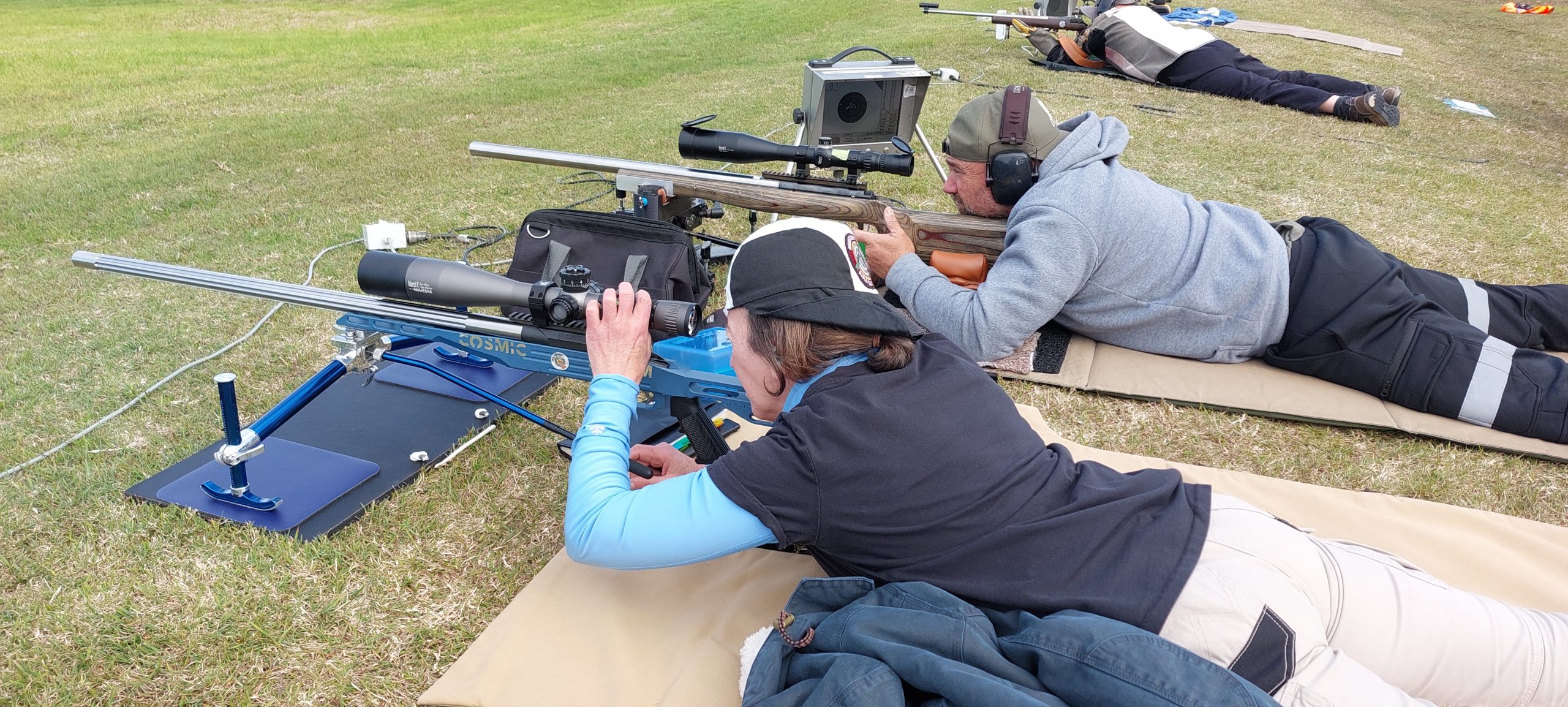
F-TR is the restricted class of F-Class. It uses the same two calibres as fullbore Target Rifle, .223 and .308, but you shoot it prone off a bipod and look through a scope instead of using iron sights and a sling.
F-Class started in Canada in the 1990s. George Farquharson came up with it so shooters could use a scope and a rest rather than iron sights and a sling. Two classes grew out of that. F-Open is the anything-goes class: calibres up to .35, fired off a pedestal rest. F-TR is the tighter class for ordinary service calibres.
F-TR is short for F-Class Target Rifle. You will also see it written F/TR, where the TR stands for Target/Restricted. It sticks to the same two calibres as Target Rifle, .223 Remington and .308 Winchester, fired prone through a scope off a bipod with a bag under the butt.
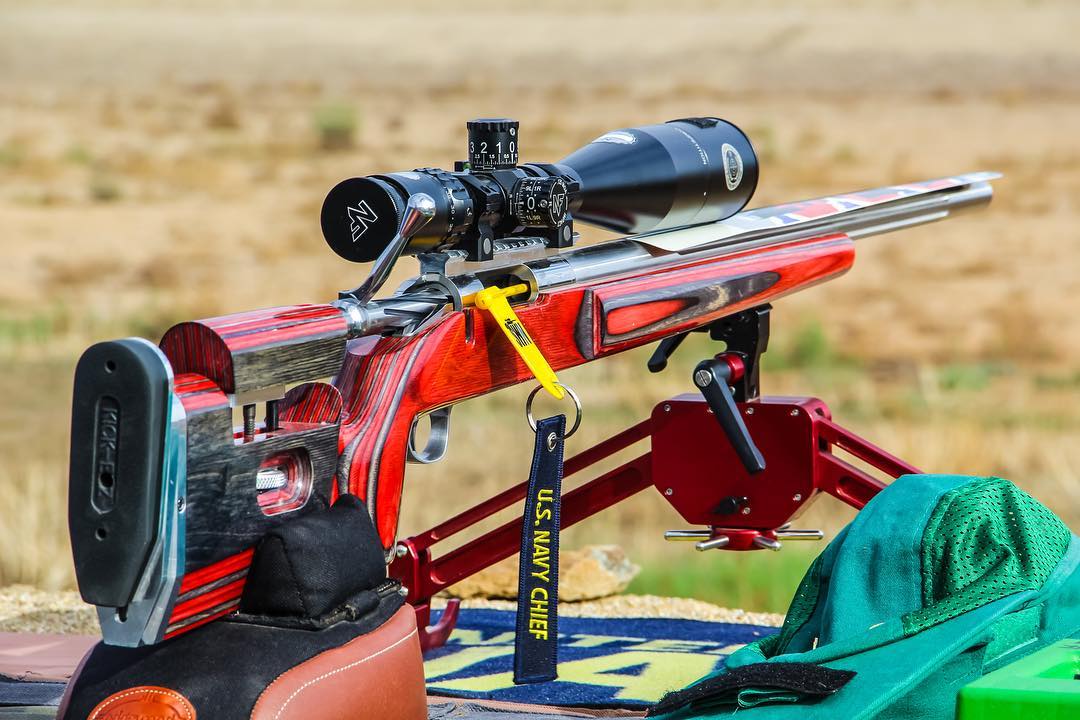
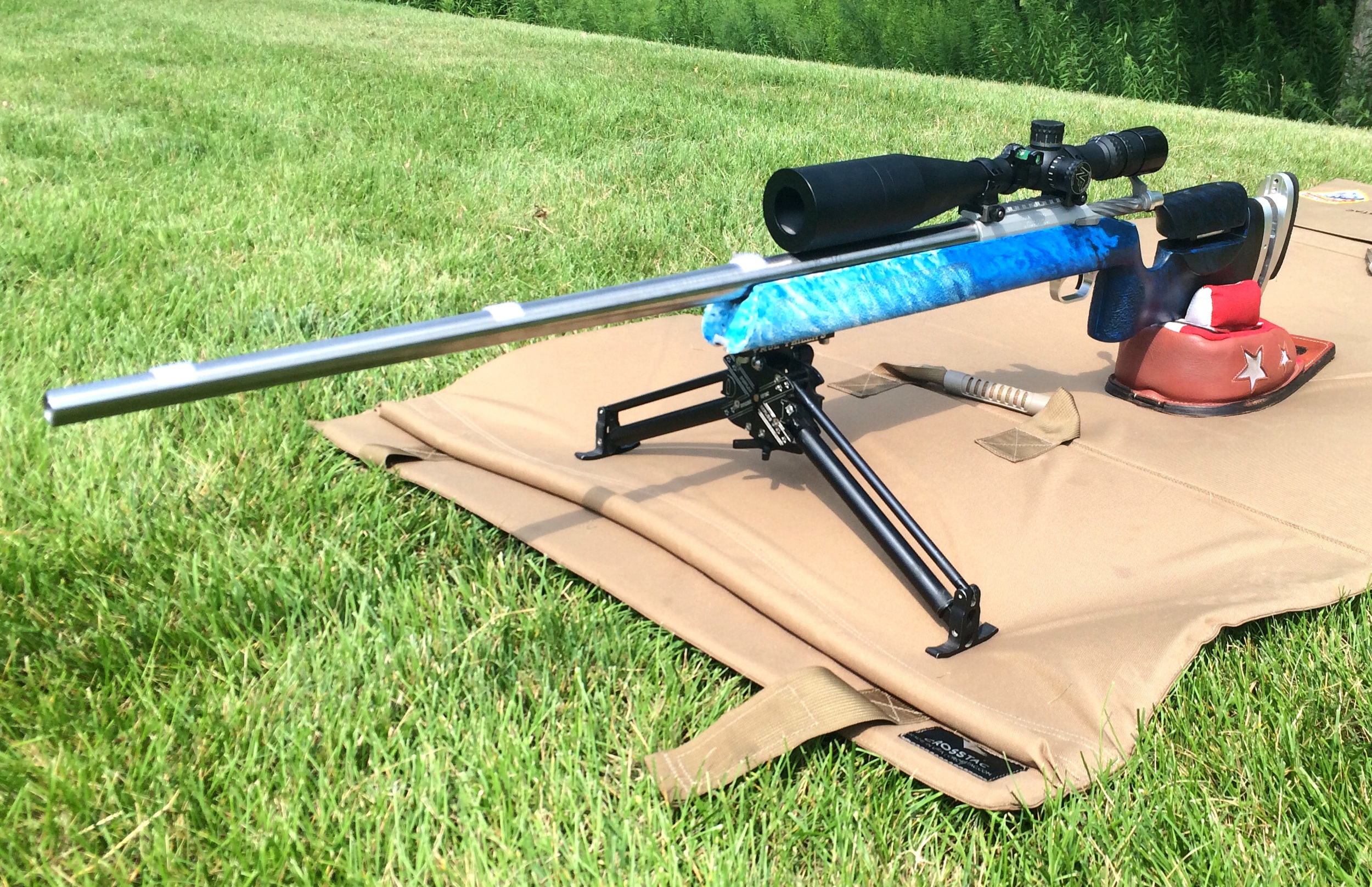
What sets it apart from F-Open is the front support. There is no pedestal rest. The rifle sits on a bipod attached to it, and you can use a rear bag, but nothing that resets the rifle to aim for you between shots. The whole rifle, scope and bipod included, has to come in under 8.25 kg.
Bullet weight, on the other hand, is open. Australian F-Standard keeps you on the lighter Target Rifle bullets; F-TR does not. Most shooters load heavier, high-BC projectiles, often 185 to 215 grain in .308, which hold their line better in the wind at the longer distances.
F-TR at a Glance
A younger code
F-TR is still fairly new. The NRAA brought it into prize meetings and Queen’s events around the country from about 2013, after the Australian team did well at the F-Class World Championships at Raton, New Mexico that year. It has caught on quickly since.
At Bankstown Chatswood we shoot F-TR on the same target as Target Rifle, F-Standard and F-Open. ANZAC Range runs out to 800m, so that is our range: 300 to 800m.
It is also one of the easier ways into scoped long-range shooting. The calibres are cheap and familiar, you do not need a pricey front rest, and you are on the same target as everyone else. Already own a .308 or a .223? A scope and a solid bipod will get you on the line.
Course of Fire
The standard course of fire for our club is 2 details, each consisting of 2 sighters and 10 scoring shots. Good sighters can be kept as scoring shots. The absolute centre of the target is scored as a Super V, or more specifically an X, with 6, 5, 4, 3 and 2 rings present on the target. Typically the remainder of the target area is considered to be worth 1 point (a hit) but this does vary from target to target. The maximum total is 60.10 points per detail, with a total of 120.20 points being the highest possible total for both details. Scoring for F-TR, F-Standard and F-Open is identical.
On paper targets, for each shot fired the target is pulled down and the shot marked, then raised so the shooter can observe where the last shot landed and the scorer can record the score. With the switch to electronic targets for club shooting there is no delay in marking the targets — the shots appear on the shooter’s screen just a few seconds after the bullet hits the target.
As a club we take turns to shoot on one or more targets (depending on numbers) and we share the range with many other clubs who will have their own target(s). Because our club has F-Class and T/R shooters firing on the same target, F-TR shooters line up right alongside everyone else.
Targets
F-TR uses the same target as F-Standard and F-Open. The targets vary in size for each distance but do so in a way that doesn’t significantly alter their appearance to the shooter.

The actual dimensions are listed in the following table (dimensions in mm).
| Aim | Super X | 6 | 5 | 4 | 3 | 2 | 1 | |
|---|---|---|---|---|---|---|---|---|
| 300m | 600 | 35 | 70 | 140 | 280 | 420 | 600 | ROT |
| 400m | 800 | 46 | 93 | 186 | 373 | 560 | 800 | ROT |
| 500m | 1000 | 72 | 145 | 290 | 660 | 1000 | 1320 | ROT |
| 600m | 1000 | 80 | 160 | 320 | 660 | 1000 | 1320 | ROT |
| 700m | 1120 | 127 | 255 | 510 | 815 | 1120 | 1830 | ROT |
| 800m | 1120 | 127 | 255 | 510 | 815 | 1120 | 1830 | ROT |
Equipment
Basic equipment for F-TR:
- Rifle chambered in .308 or .223 — complete rifle (with scope and bipod) no heavier than 8.25 kg
- A reasonably good scope, ideally greater than 18x power, with graduated windage and elevation turrets, a fine reticle and 1/4 MOA adjustments
- Tapered scope rail or mounting system that provides additional elevation adjustment
- An attached bipod (rigid or folding legs) as the front support — no pedestal rest
- Rear sandbag
- Shooting mat
- Gun case or bag
- Ammunition — heavier high-BC bullets are permitted and popular
- A range box or some other way of carrying your gear
- Ear muffs (plugs might seem OK if you’re planning to shoot a .223, but the person right beside you might be shooting a .308)
- Ammunition case (e.g. MTM cases — for non-reloaders it saves messing around with boxes of ammunition on the line)
- Cleaning accessories
Explore More